Dental implants
Dental implants in London: 10 things to know
A practical guide to implant assessment, treatment stages, costs, alternatives and aftercare at 66 Harley Street.
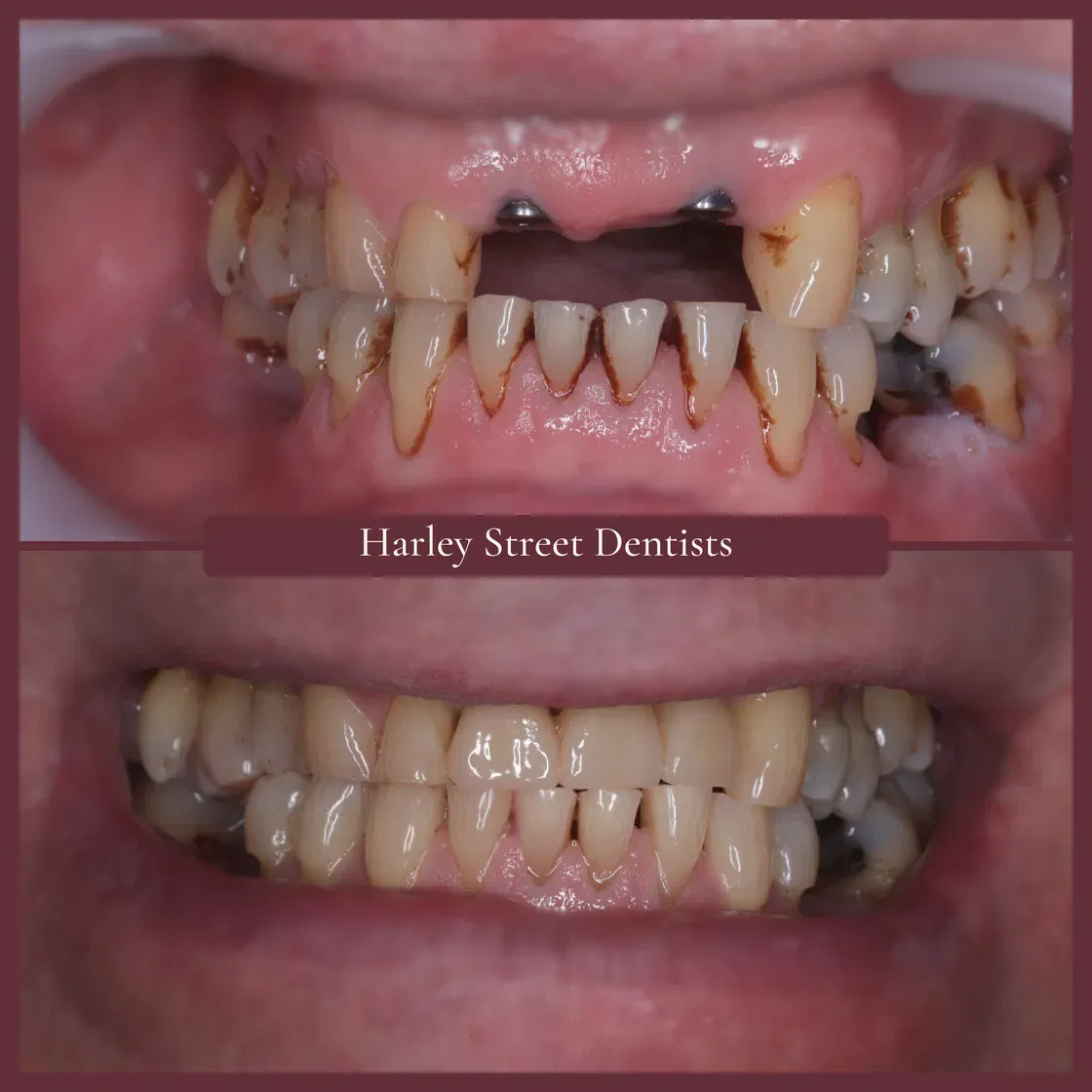
Choosing dental implants in London is a significant decision. It can help to understand what treatment involves, how long it may take and what the price includes before deciding whether to proceed.
An implant may replace one tooth, several teeth or support a denture. But it is not simply a replacement tooth fitted in a single appointment: your oral health, bone, preferences and ongoing care all matter. Here are ten useful points to discuss with your dentist.
1. An implant is one part of a replacement tooth
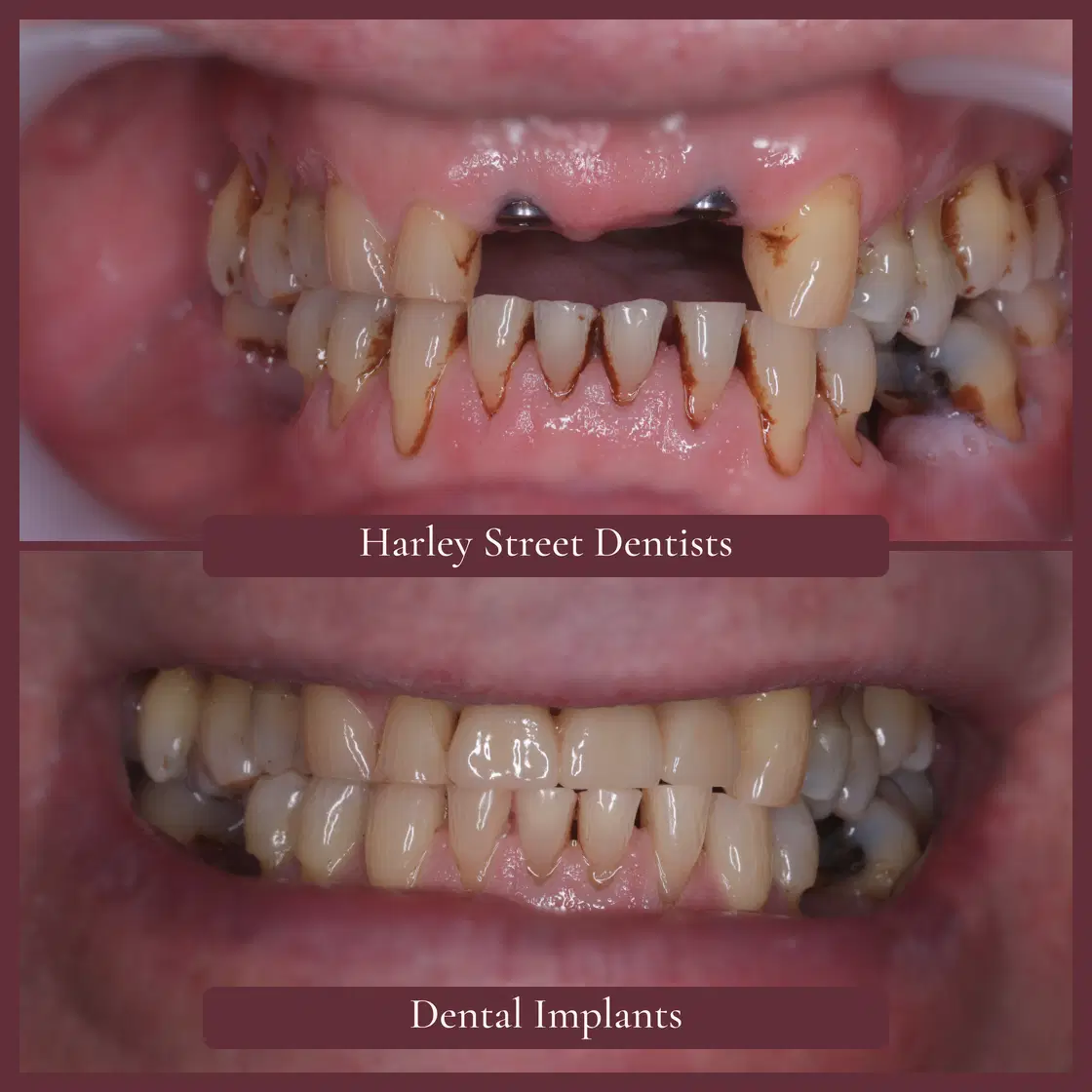
A dental implant is a small post, usually made of titanium, placed in the jawbone. After it has healed, a connector called an abutment supports the visible replacement tooth, such as a crown, bridge or denture.
The right design depends on how many teeth are missing and your clinical situation. Your dentist should plan the replacement teeth as well as the implants before treatment begins.
2. Assessment comes before a recommendation
A consultation is a chance to explain what you would like help with and ask questions. Your clinician will assess your mouth and dental history, including the condition of your gums and remaining teeth. X-rays or a 3D scan may be recommended where relevant to understand the bone and plan treatment.
You should leave with a clearer understanding of the options suitable for you, the likely stages and any further information needed. At Harley Street Dentists, the dental implant consultation is complimentary with an examination; a personal treatment plan and estimate follow assessment.
3. Suitability depends on your individual circumstances
Healthy gums and good oral hygiene provide an important foundation. Existing decay, infection or active gum disease may need attention before implant treatment is considered. Your clinician will also assess whether there is enough bone to support an implant.
Smoking, some medical conditions and certain medicines can affect healing or increase the chance of complications. This does not automatically rule out treatment, but it is important to discuss your health, medications and smoking honestly with your dental team. Do not stop prescribed medicines unless the clinician who prescribed them advises you to.
4. Treatment usually takes place in stages
Implant treatment involves a surgical stage and a restorative stage. The implant is placed in the jawbone, then given time to heal. Once healing is satisfactory, the crown, bridge or denture is made and fitted.
The healing period often takes several months. If additional procedures, such as bone grafting, are needed, treatment may take longer. The Cambridge University Hospitals patient guide explains that implant treatment can take a year or more from start to finish. Your own timescale will depend on your treatment plan.
5. Ask what your implant estimate includes
If you are researching dental implants cost UK, you will find that prices vary according to the treatment required and what each fee covers. A headline price may refer to the implant fixture alone, rather than the complete replacement tooth.
Harley Street Dentists’ fee guide, dated 6 October 2026, lists:
- Dental implant fixture only: from £1,750
- Dental implant with crown: from £3,250
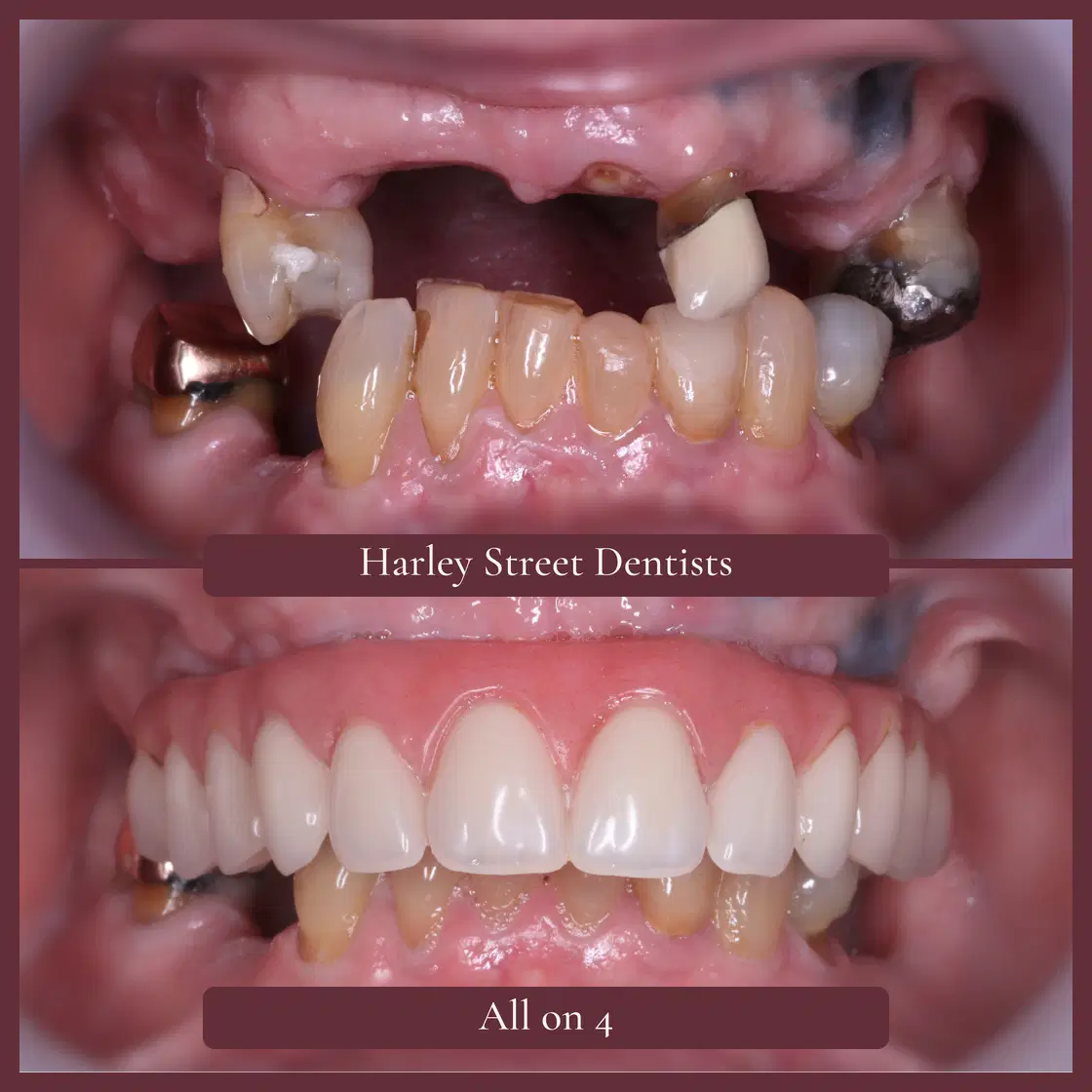
- All-on-4 / full arch: from £12,500 per arch
These are starting prices, not a personalised quote. Complexity, laboratory requirements and additional procedures may affect the estimate. Ask whether imaging, extraction, temporary teeth, grafting, follow-up appointments and maintenance are included or charged separately. You can review the full fee guide and ask for a breakdown of your proposed care.
6. There are alternatives to implants
Implants are not the only way to replace a missing tooth, and they are not necessarily the right choice for everyone. Depending on your circumstances, alternatives may include a bridge, a removable denture or leaving the space as it is.
Each option has different implications for treatment, maintenance and neighbouring teeth. You can read more about ways to replace missing teeth, then ask your clinician to explain which choices are appropriate in your case. You do not need to arrive with a preferred treatment already decided.
7. Understand the risks as well as the benefits
As with any surgery, there may be short-term discomfort, swelling, bruising or bleeding. Sometimes an implant does not bond with the bone as intended. Longer-term problems can include inflammation or infection around the implant, loosening, or wear and damage to the crown or other restoration.
Your individual risks depend on factors such as your oral and general health, and the position of the implant. Your clinician should explain the relevant risks and what to do if you notice pain, bleeding, a bad taste or looseness. The British Society of Periodontology’s implant FAQs provide further general information.
8. Ongoing care is part of the treatment
Implants need regular cleaning and professional monitoring. Your dental team can show you how to clean around your implant and recommend brushes or other aids suited to your restoration. Regular check-ups and hygiene appointments help your team monitor the implant and surrounding tissues.
An implant can be a long-term solution, but it cannot be promised as permanent. The crown, bridge or denture may also need repair or replacement over time. Ask what aftercare is recommended and how often you should attend.
9. Plan carefully if you are travelling to London
If you are visiting from overseas, discuss the likely stages and timing with your clinician before booking flights or accommodation. Implant care may involve multiple appointments, and the treatment plan can change if further assessment or procedures are needed.
Harley Street Dentists’ concierge can help coordinate practical arrangements around your visit. The clinical team will need to discuss the treatment and timing with you first. You can find details on planning an international visit.
10. Take time to review the written plan
Before agreeing to treatment, ask for a written plan that sets out the proposed care, alternatives, expected stages, fees and aftercare. You may also want to ask who will carry out each part of treatment, what happens if the plan needs to change and whether any guarantee applies.
It is reasonable to take time to consider your options or seek another opinion, particularly for complex treatment. The General Dental Council’s guidance on choosing and paying for dental care is another useful source of information.
A good next step
If you are considering dental implants in London, start with a conversation about what is missing, what matters to you and what questions you have. An assessment can help clarify whether implants may suit you and what alternatives are available. You can contact the Harley Street Dentists concierge to arrange a conversation and discuss practical details before deciding how to proceed.
This article offers general information and is not a diagnosis or a substitute for individual dental advice. Suitability, risks, fees and treatment timescales can only be discussed properly after assessment.
October 28, 2026